Over the past three years, software engineering has quietly crossed an irrevocable threshold. Writing software is no longer an exclusively artisanal craft where every single character originates in the mental model of a human developer. Instead, AI-generated code now accounts for a double-digit percentage of modern enterprise codebases.
From smart inline completions that predict the next three functions to agentic workflows capable of scaffolding entire microservices from a conversational prompt, AI coding assistants have accelerated velocity across every sector. Repetitive boilerplate has plummeted. Prototype turnaround has collapsed from days to hours.
Yet, this unprecedented speed has introduced an unsettling structural question that traditional software licensing and agile ceremonies were never designed to answer:
When software breaks in production, corrupts a customer database, or leaks confidential financial records—and the faulty logic was drafted verbatim by an artificial intelligence model—who actually owns the failure?
Is it the junior engineer who pressed Tab to accept the suggestion?
The senior peer who approved the Pull Request during a hurried lunch break?
The vendor who trained the foundation model on millions of public repositories?
Or the executive leadership that mandated an "AI-first" velocity roadmap without provisioning defensive engineering guardrails?
To answer this, we must look past the marketing promises of autonomous programming and inspect the legal, technical, and architectural reality of shipping software in production.
1. The Midnight Outage: When Syntactically Sound Code Fails in Production
Consider a realistic engineering scenario that played out in an enterprise payment gateway earlier this year.
An engineer was tasked with migrating an invoice settlement worker to process batch webhooks concurrently. Pressed by a bi-weekly sprint deadline, the developer prompted an AI assistant:
"Write a thread-safe Redis-backed idempotency lock in Go that deduplicates webhook deliveries across multiple Kubernetes pods."
// Generated by AI assistant: Idempotency locking pattern
func (w *WebhookWorker) ProcessInvoice(ctx context.Context, invoiceID string) error {
    lockKey := fmt.Sprintf("lock:invoice:%s", invoiceID)

    // AI generated logic: Acquire lock with 30s TTL
    acquired, err := w.redisClient.SetNX(ctx, lockKey, "locked", 30*time.Second).Result()
    if err != nil || !acquired {
        return ErrDuplicateEvent
    }
    defer w.redisClient.Del(ctx, lockKey) // <- The latent vulnerability

    // Execute billing charge against banking upstream
    return w.chargePaymentGateway(ctx, invoiceID)
}
On paper, the snippet is clean, idiomatic, and compiles without a single warning. Unit tests checking positive execution pass in milliseconds. The code merged directly into main.
Three weeks later, during a Friday traffic surge, the upstream banking API took 34 seconds to respond due to downstream network contention. At the 30-second mark, Redis silently expired the key. A second pod received a duplicate retry webhook, successfully claimed the newly released lock, and dispatched a second capture call to the payment gateway.
The customer was billed twice. Thousands of duplicate transactions cascaded across the database before an engineer pulled the killswitch.
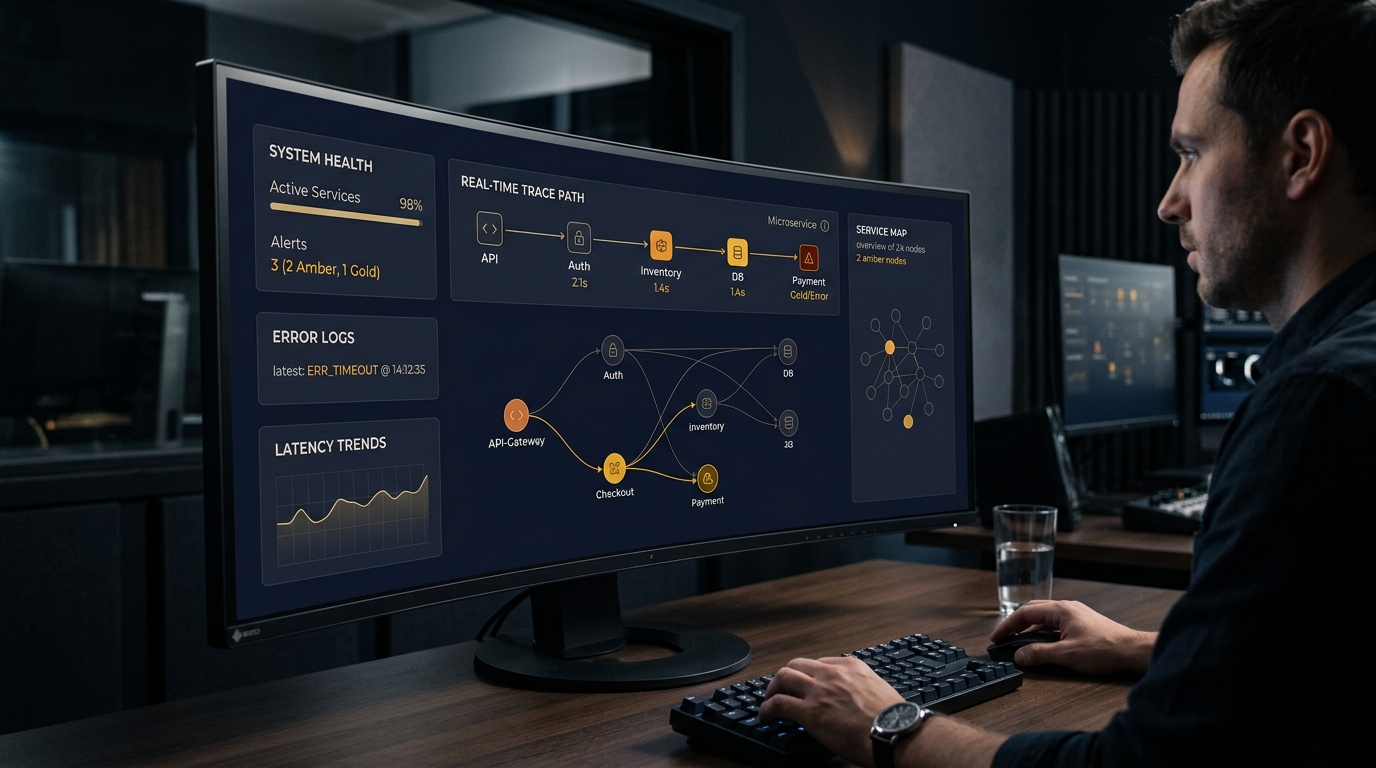
The root issue was not a basic compilation bug. It was a failure of contextual domain reasoning: the AI assistant had no understanding of payment distributed lock lease renewal (the Redlock heartbeating pattern), network backpressure, or the severe financial side-effects of an unrenewed TTL.
The software broke. Customer trust eroded. Who was accountable?
2. The Accountability Matrix: Who Owns What?
When a catastrophic failure occurs, accountability cannot be dispersed into thin air. Let us evaluate the four primary candidates often dragged into the post-mortem.
| Stakeholder | Typical Defense | Actual Accountability Reality |
|---|---|---|
| The AI Model Provider (OpenAI, Anthropic, GitHub) | "Our Terms of Service explicitly disclaim all express and implied warranties. Output is experimental and provided AS-IS." | Zero Legal/Operational Liability. Enterprise End-User License Agreements (EULAs) universally place all risk of code execution on the user. |
| The Individual Developer | "The model hallucinated a subtle edge case; I asked for an idempotency lock and the system told me it was correct." | Primary Professional Responsibility. The developer is the licensed operator who stamped their Git signature on the commit. |
| The Engineering Manager / Reviewer | "I reviewed 400 lines across 8 PRs that day. The syntax was pristine and CI/CD green-lighted it." | Systemic Process Responsibility. A failure in pull-request diligence and testing coverage standards is a managerial failure. |
| The Executive / CTO | "We bought developer tooling to increase velocity; we expect the team to deliver quality." | Ultimate Governance Liability. If leadership pushes for raw code volume without investing in security tooling and verification budgets, systemic failure is guaranteed. |
Why Model Providers Are Off the Hook
Every developer and tech founder must read the standard terms of their AI coding tools. Without exception, foundational model providers state that AI outputs are probabilistic suggestions, not certified engineering deliverables. The vendor does not sign your service-level agreements (SLAs), does not hold errors-and-omissions insurance for your clients, and will not appear before your regulatory compliance auditors.
Relying on the tool provider for accountability is a legal and operational dead end.
3. Why “The AI Wrote It” Is an Unacceptable Defense
In professional disciplines—civil engineering, aviation, healthcare—the tools an expert utilizes never absorb liability for structural failures.
If a structural architect uses finite-element CAD software to calculate the load-bearing requirements of a suspension bridge, and the software contains an undetected rounding error that causes the bridge to buckle under high winds, the architect cannot tell the inquiry commission: "The CAD tool drafted the beam dimensions; speak to the software vendor."
The professional stamp exists precisely to signify that a qualified human inspected the outputs, applied situational judgment, validated safety margins, and assumed ethical and legal responsibility for real-world execution.
In software developer responsibility, the commit author and the reviewer are the structural architects. When an engineer merges code via Git, they are certifying:
- I understand how this code functions under normal conditions.
- I understand how this code fails under adverse network, security, and memory pressures.
- I am prepared to diagnose, debug, and remediate this logic during an incident.
If you cannot fulfill these three criteria because an AI assistant wrote code beyond your comprehension, you have not accelerated development—you have simply outsourced engineering comprehension to a probabilistic autocomplete engine.
4. Human Review: From Passive Typist to Critical Editor
The adoption of AI coding alters the core role of a software engineer. Historically, the developer spent 70% of their cognitive bandwidth translating human requirements into syntax, and 30% reviewing and testing it.
With AI software development, that balance flips upside-down:
- 10%: Formulating prompts and context.
- 20%: Generating initial implementations.
- 70%: Rigorous inspection, architectural validation, edge-case probing, and automated verification.

Unfortunately, human psychology works against this model due to a phenomenon known as Automation Bias—the unconscious tendency for humans to favor suggestions from automated decision-making systems and ignore contradictory indicators.
When an AI assistant produces 80 lines of impeccably formatted, beautifully indented, and comprehensively commented code, the human brain registers a false sense of completion. The code looks like the work of a seasoned staff engineer. Reviewers are far more likely to skim past subtle vulnerabilities—such as missing authorization checks, improper error wrapping, or unindexed database queries—than if the code had arrived in the clumsy syntax of a hurried junior developer.
Treating AI output with greater skepticism than human output is the hallmark of modern senior engineering.
5. Security Debt: Hallucinated Packages and Silent Vulnerabilities
The risks associated with AI-generated software go far beyond standard runtime logic bugs. They pose specific, insidious cybersecurity vulnerabilities that traditional static analysis tools often miss.
1. Package Hallucination & Supply Chain Poisoning
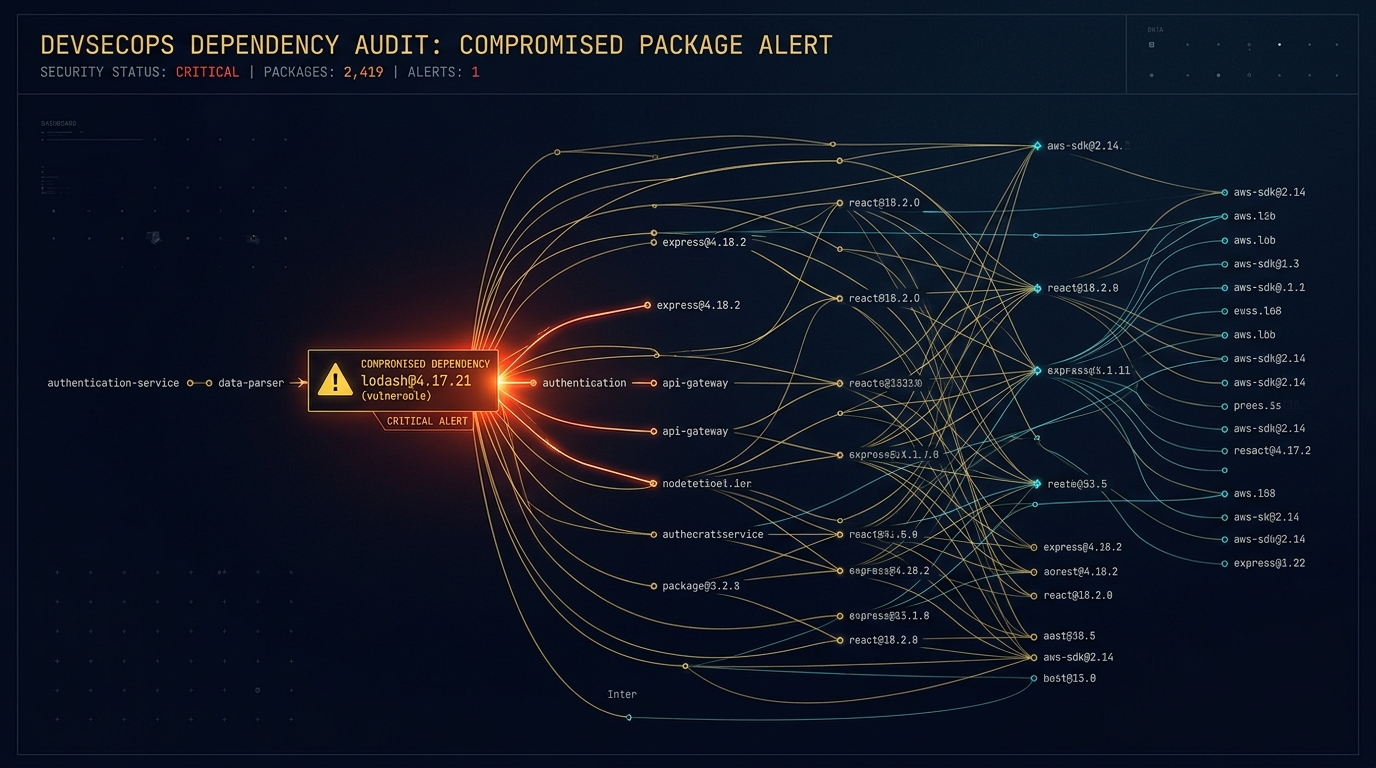
Large Language Models generate text based on statistical token prediction. When prompted to solve an obscure problem, an AI assistant may hallucinate a package name that sounds perfectly legitimate—such as express-jwt-bearer-validator or crypto-aes-vault-sync.
If a hurried developer runs npm install express-jwt-bearer-validator without verifying its origin, an attacker who previously registered that exact hallucinated package on npm can execute arbitrary code inside the organization's build pipeline. Security researchers have already demonstrated that thousands of hallucinated package names can be claimed as trojan horses.
2. Insecure Default Configurations
AI models trained on millions of public open-source repositories absorb the bad habits of those repositories. If historical public code frequently disabled SSL verification for local debugging (CURLOPT_SSL_VERIFYPEER = false), accepted unescaped user parameters in SQL fragments, or utilized deprecated cryptographic primitives (MD5, SHA1), the assistant will faithfully reproduce those antipatterns in your proprietary software.
3. Contextual Authorization Blind Spots
While an AI assistant can easily verify whether a user has a valid JWT token (Authentication), it almost never understands your application's nuanced tenancy policies (Authorization). It will effortlessly write an endpoint that fetches /api/tenant/{id}/invoices without checking if the authenticated user belongs to that specific tenant—introducing critical Insecure Direct Object Reference (IDOR) vulnerabilities straight into production.
6. The 5-Layer Defensive Guardrail for AI-Assisted Code
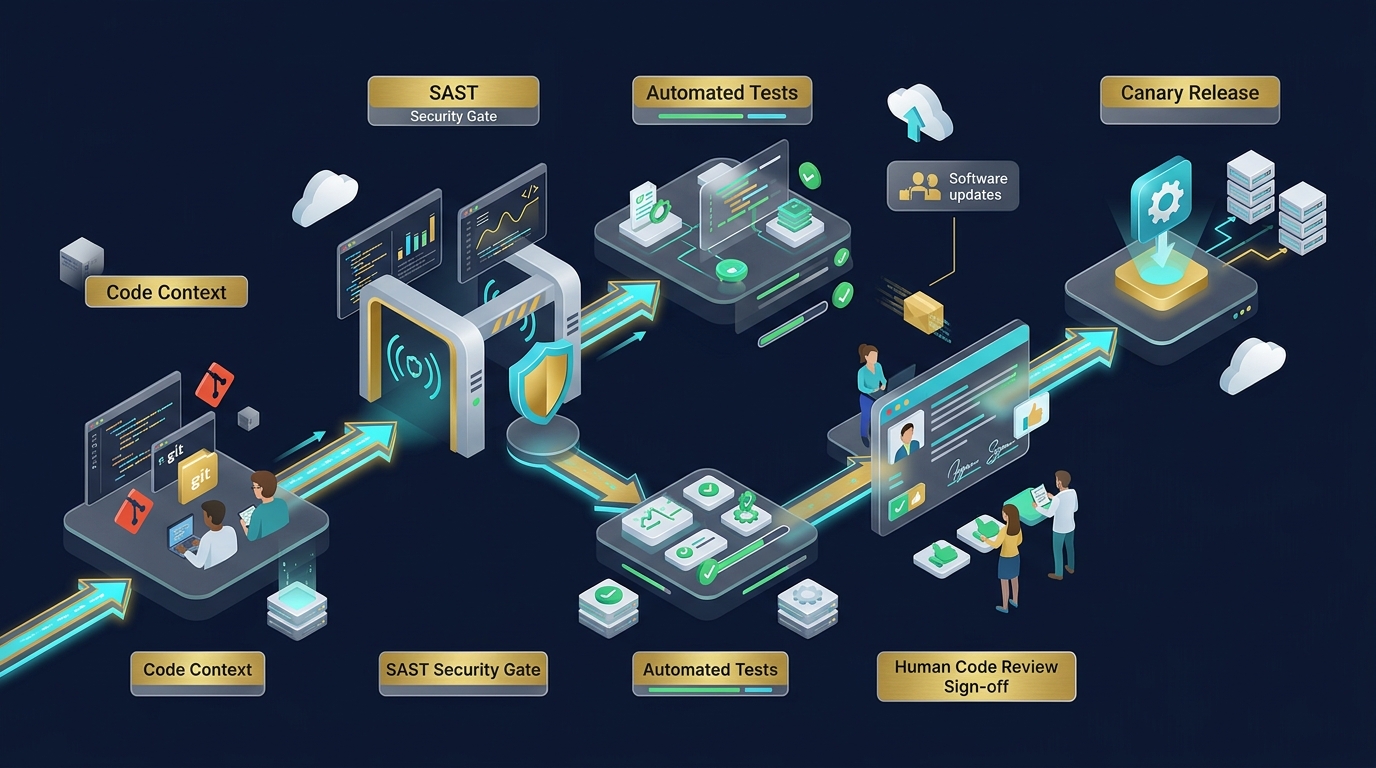
To deploy software safely when developers use AI coding assistants, organizations cannot rely solely on developer willpower. Engineering teams need an automated defense-in-depth pipeline.
┌──────────────────────────────────────────────────────────┐
│                   1. Context Guardrails                  │
│    (Curated prompt instructions, approved repo patterns) │
└────────────────────────────┬─────────────────────────────┘
                             │
┌────────────────────────────▼─────────────────────────────┐
│                 2. Static Analysis & SAST                │
│    (Semgrep, SonarQube, Snyk, Bandit, ESLint Security)   │
└────────────────────────────┬─────────────────────────────┘
                             │
┌────────────────────────────▼─────────────────────────────┐
│                 3. Dynamic Testing & TDD                 │
│      (Mutation tests, boundary fuzzing, integration)     │
└────────────────────────────┬─────────────────────────────┘
                             │
┌────────────────────────────▼─────────────────────────────┐
│               4. Structured Human Code Review            │
│   (Mandatory proof of manual test, 2-engineer sign-off)  │
└────────────────────────────┬─────────────────────────────┘
                             │
┌────────────────────────────▼─────────────────────────────┐
│            5. Runtime Observability & Canary             │
│   (Distributed tracing, anomaly alerts, fast rollback)   │
└──────────────────────────────────────────────────────────┘
Layer 1: Context & Dependency Allow-lists
Configure team-wide developer environments with strict dependency firewalls. Automated package scanners should immediately reject any pull request importing libraries not indexed in the company's internal registry or known package trust registries.
Layer 2: Aggressive Static Application Security Testing (SAST)
Incorporate zero-tolerance SAST gates (such as Semgrep rules, SonarQube, and CodeQL) directly into the pre-commit and CI phase. If an AI suggests an unparameterized database query or a weak crypto cipher, the build must break before the reviewer even receives a notification.
Layer 3: Test-Driven Verification (TDD) as an Antidote
The most reliable safeguard against AI hallucination is writing tests before asking the model to implement the logic. When a developer creates strict boundary tests (handling timeouts, null payloads, concurrency race conditions, and out-of-order execution), the generated code is instantly subjected to deterministic verification rather than subjective visual review.
Layer 4: Mandatory PR Justification
Every pull request containing AI-assisted contributions should include a standard validation statement:
"I have verified this logic locally, executed edge cases under high load/fault conditions, and validated that all imported dependencies exist in official registries."
Layer 5: Canary Deployments with Telemetry Anomaly Detection
Never deploy AI-accelerated code to 100% of production traffic at once. Roll out new releases to a 2% canary group, monitoring memory allocations, database query planning spikes, and error budgets for at least 30 minutes before progressing.
7. Cognitive Friction: Why You Must Understand What You Ship
There is a dangerous paradox emerging in software teams: Velocity is increasing, but comprehension is plummeting.

When engineers manually craft code, the physical process of typing forces cognitive friction. It gives the mind time to ponder:
- "What happens if this slice is empty?"
- "Will this lock starve other routines under 10,000 requests per second?"
- "Is this database column indexed for this search filter?"
When AI completes the function in 400 milliseconds, that natural contemplative pause vanishes. The engineer moves from contemplation to confirmation.
If your team deploys code that no individual engineer fully understands, you no longer possess a proprietary software asset. You possess an opaque legacy system assembled in real-time. When a zero-day vulnerability emerges or an unexpected outage strikes at 3:00 AM, the engineers on-call will be unable to trace the execution flow without prompting the AI again—introducing fatal delays into incident resolution.
Understanding must always precede deployment.
8. How Companies Should Structure an Internal AI Coding Policy
Rather than either outright banning AI tools or permitting unchecked, anarchic usage, forward-thinking CTOs are deploying pragmatic responsible AI development policies.
A resilient enterprise AI coding policy includes four foundational pillars:
1. Clear Permissible Data Boundaries
Prohibit pasting proprietary source code, internal API keys, customer PII, or confidential algorithms into consumer-grade, unvetted AI tools where prompt data may be retained for future model training. Require the use of enterprise-tier subscriptions that guarantee data isolation and zero training retention.
2. Mandatory Human Provenance
Explicitly codify that the engineer who opens the pull request owns 100% of the liabilities, bugs, security flaws, and performance regressions introduced by that code. AI is officially classified as an interactive documentation assistant, not an autonomous co-author.
3. Ban on Blind PR Generation
Prohibit the submission of raw, unedited AI-generated pull requests. Code reviews must verify that variable names follow internal architectural conventions, existing domain abstractions are re-used, and no redundant duplicate logic is introduced.
4. Intellectual Property & License Compliance
Enforce tooling (such as GitHub Copilot’s public code filter) that prevents models from synthesizing code fragments identical to restrictive copyleft licenses (such as GPLv3) unless explicitly permissible within your software architecture.
9. A Practical 7-Point Checklist for Teams Shipping Code with AI
Before merging any pull request influenced by AI-generated code, run through this operational sanity checklist:
- 1. Intentional Line-by-Line Comprehension: Can the author explain the mechanical purpose of every loop, pointer, closure, and regex pattern without re-prompting the AI?
- 2. Dependency Provenance: Are all imported packages verified on standard registries (npm, PyPI, Crates.io, Packagist) with high download volumes and verified authors?
- 3. Security & Injection Auditing: Does the generated snippet handle raw user inputs through prepared statements, sanitized DOM writers, or parameterized ORM queries?
- 4. Concurrency & Lifetime Checks: If threads, async coroutines, or distributed locks are invoked, are timeouts, context cancellations, and race conditions tested?
- 5. Boundary Condition Testing: Does the suite include automated tests for empty payloads, negative numbers, null values, network timeouts, and unauthorized tokens?
- 6. Observability Hooks: Are meaningful structured logs, trace spans, and metric counters embedded in the code so failure states are immediately debuggable?
- 7. Domain Convention Alignment: Does this snippet honor our company's existing design patterns, database abstraction layers, and internal service utilities rather than reinventing the wheel?
10. The Future of Software Engineering in an AI-First World
The widespread adoption of AI in software engineering is not the end of the human software developer. It is the end of the developer who functions solely as a human compiler.
In the coming decade, the most valuable engineers will not be those who can churn out syntactically correct algorithms fastest. Syntax is cheap; code generation is commoditized.
Instead, the premium value is shifting directly to:
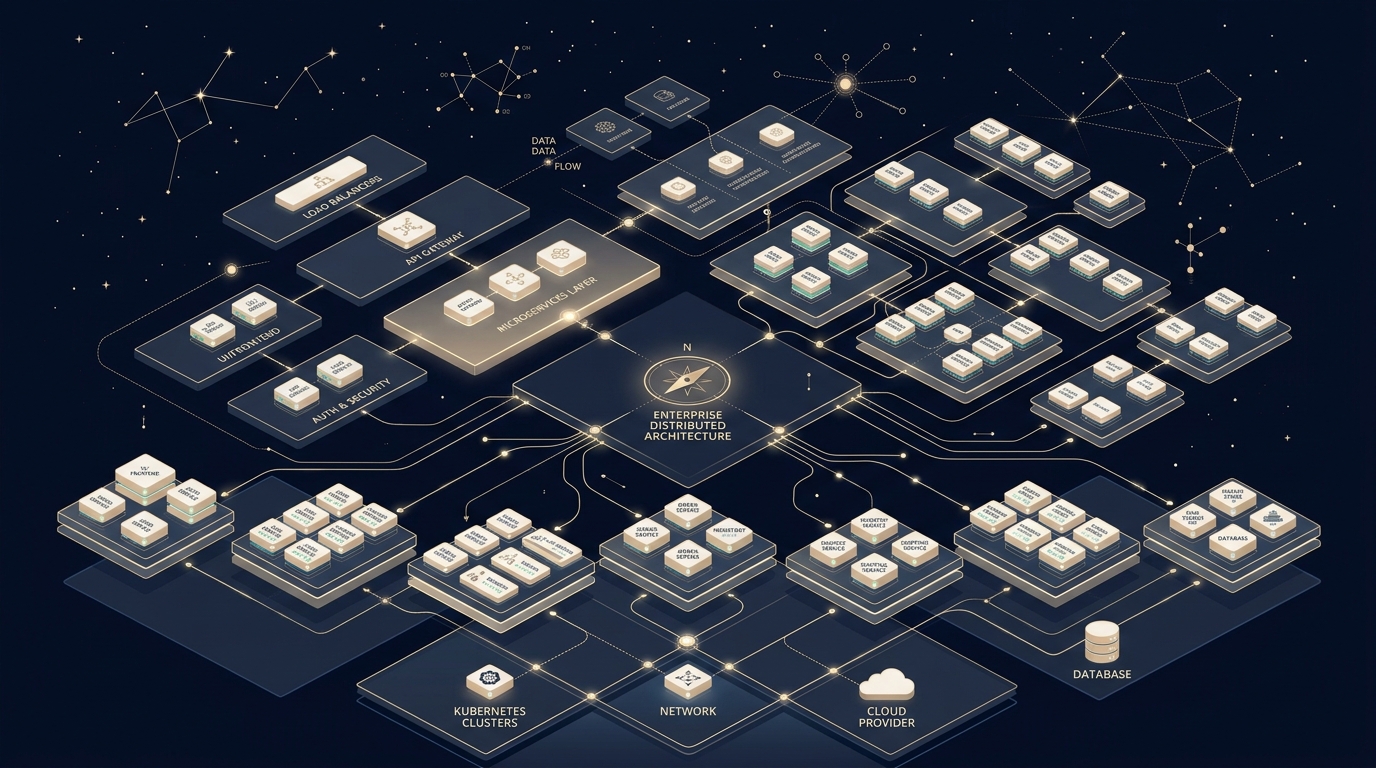
- Systems Architecture: Designing distributed topologies that fail gracefully.
- Threat Modeling & DevSecOps: Anticipating how bad actors will exploit subtle logical edge cases.
- Domain Modeling: Translating complex business contracts and human needs into resilient technical rules.
- Verification Engineering: Constructing robust test suites, integration sandboxes, and verification systems that keep autonomous code generation within safe parameters.
AI tools are incredible force multipliers. But force multipliers amplify whatever they act upon: they multiply engineering brilliance into enterprise-scale velocity, just as they multiply thoughtless shortcuts into enterprise-scale disaster.
11. Conclusion: Accountability Is the Bedrock of Engineering
When the server crashes, the database deadlocks, or customer records spill onto the public internet, pointing a finger at an algorithm will never appease an affected user, a corporate client, or a board of directors.
AI does not have a professional reputation to defend. It cannot be called into an emergency war room, it does not manage customer relationships, and it will never take responsibility for systemic downtime.
True engineering has never been defined by the speed at which characters are typed onto a screen; it is defined by the integrity, judgment, and responsibility of the individuals who stand behind the system when the switch is flipped.
Embrace the remarkable efficiency of AI coding assistants. But remember: the human engineer holds the keyboard, stamps the pull request, and owns the outcome.
Frequently Asked Questions (FAQ)
Can a company legally sue an AI tool provider if generated code causes a data breach?
Under standard commercial agreements and EULAs, almost certainly not. Providers universally include disclaimer clauses stating that AI outputs are provided "as-is" without warranties of fitness, security, or non-infringement. The legal responsibility for using and verifying generated code rests entirely with the deploying entity.
Does AI-generated code produce more security vulnerabilities than human-written code?
Studies by cybersecurity researchers indicate that while AI models produce fewer basic typographical errors, they frequently reproduce outdated security practices, insecure default parameters, and authorization blind spots found in historical training datasets. Without automated SAST checks and rigorous human review, AI can rapidly scale subtle vulnerabilities across an application.
What is "package hallucination" in AI coding?
Package hallucination occurs when an AI model invents plausible-sounding library or module names that do not actually exist in package registries. Malicious attackers monitor these common hallucinated names, create real libraries under those names, and inject malicious payloads—tricking developers into downloading supply-chain exploits.
How can engineering managers prevent developers from blindly approving AI code?
Implement automated CI checks, test-driven requirements (TDD), mandatory test coverage thresholds, and pair reviews for high-risk modules (payments, auth, data privacy). Additionally, evaluate engineering output based on code reliability, operational stability, and architectural quality rather than raw pull request count or lines of code merged.
Is it safe to use AI coding tools for proprietary or regulated software projects?
Yes, provided you use enterprise-grade AI solutions with contractual guarantees against data training on your prompts, enforce clear data privacy boundaries, and maintain a rigorous multi-layer review and testing pipeline.
Recommended Authoritative References & Citations
- NIST AI Risk Management Framework (AI RMF 1.0):
Comprehensive guidelines for organizations assessing risks in AI design, deployment, and operational monitoring.
Reference: National Institute of Standards and Technology (NIST). - OWASP Top 10 for Large Language Model Applications:
Covers critical vulnerabilities in generative AI systems, including Insecure Output Handling (LLM02) and Supply Chain Vulnerabilities (LLM05).
Reference: Open Worldwide Application Security Project (OWASP). - CISA – Secure by Design Principles:
Federal cybersecurity guidelines highlighting vendor responsibility, proactive verification, and defense-in-depth architecture.
Reference: Cybersecurity and Infrastructure Security Agency. - GitLab Global DevSecOps Survey:
Benchmark research surveying thousands of security professionals and software developers on AI adoption and review friction.
Reference: GitLab Research. - Cornell University / arXiv LLM Code Vulnerability Analysis:
Academic study measuring the frequency of insecure code recommendations generated by commercial code assistants.
Reference: arXiv:2308.04485. - Stanford University HCI Research on AI-Assisted Developers:
Empirical investigation proving that developers using AI assistants often produce less secure code while exhibiting higher unjustified confidence.
Reference: Stanford Institute for Human-Centered Artificial Intelligence (HAI).
Building software with AI?
Jemixo Technologies helps businesses build, integrate, test, and maintain reliable software systems where AI accelerates development without replacing engineering responsibility.
Discover our AI & Autonomous Agent Services, learn about our Enterprise Web Development Standards, or Consult with Our Engineering Team.