The enterprise technology landscape has undergone a seismic shift. While chatbots dominated the AI conversation for years, 2026 marks the definitive transition to something far more powerful: Autonomous AI Agents — systems that don't just answer questions, but take action on your behalf.
At Jemixo Technologies, we've been building these systems for forward-thinking enterprises, and the results speak for themselves: 40–60% reductions in manual operations, faster decision-making, and workflows that run 24/7 without human intervention.
This article explores what autonomous AI agents are, why they matter now, and how your business can start leveraging them today.
What Are Autonomous AI Agents?
An autonomous AI agent is a software entity that can:
- Perceive its environment (APIs, databases, emails, documents)
- Reason about what needs to be done (using LLMs + business logic)
- Act independently (execute API calls, update records, trigger workflows)
- Learn from outcomes and improve over time
Unlike traditional chatbots that wait for input and respond with text, autonomous agents proactively identify tasks, plan multi-step solutions, and execute them — much like a skilled employee would.
Chatbot vs. Autonomous Agent: Key Differences
| Aspect | Traditional Chatbot | Autonomous AI Agent |
|---|---|---|
| Interaction | Reactive (waits for user input) | Proactive (initiates actions) |
| Capability | Text responses only | Executes real-world actions |
| Memory | Session-based, short-term | Persistent, context-aware |
| Integration | Limited API connections | Deep system integration |
| Decision Making | Rule-based / scripted | Reasoning-based / adaptive |
| Complexity | Single-turn conversations | Multi-step workflows |
Why 2026 Is the Tipping Point
Three converging forces have made autonomous agents viable for mainstream enterprise adoption:
1. Foundation Models Have Matured
Large language models are now capable of reliable reasoning, tool use, and structured output generation. They can follow complex instructions, handle edge cases, and maintain context across long interactions — the core requirements for autonomous operation.
2. Tool-Use Frameworks Are Production-Ready
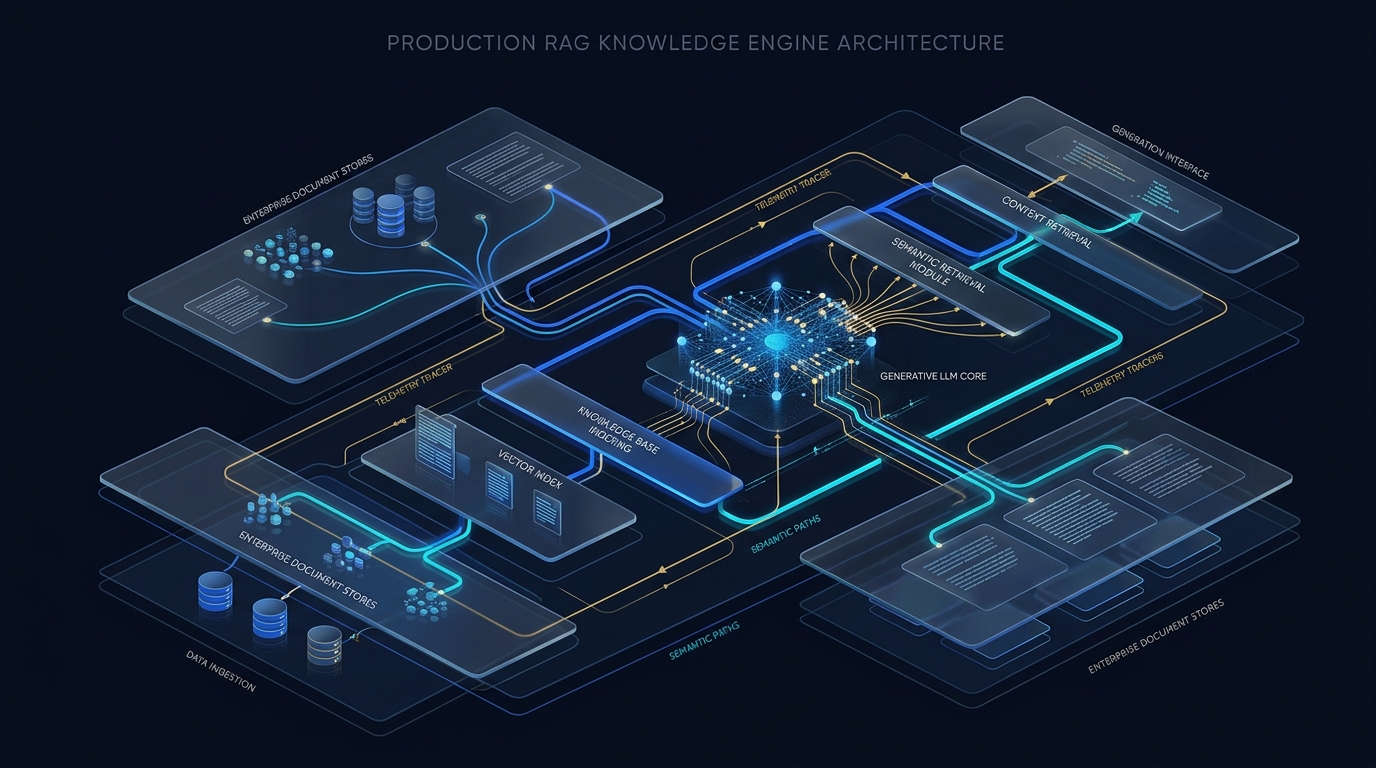
Frameworks for agent orchestration — function calling, retrieval-augmented generation (RAG), and multi-agent coordination — have moved from research experiments to battle-tested production systems. The infrastructure is ready.
3. Enterprises Demand More Than Chat
After years of deploying chatbots, enterprises have realized that answering questions is only 20% of the value. The real ROI comes from automating the actions that follow the answers: updating CRMs, processing orders, escalating issues, generating reports, and coordinating across departments.
Real-World Use Cases
Here are concrete examples of how our enterprise clients are deploying autonomous AI agents:
🏢 Customer Operations Agent
Problem: Customer support teams spend 60% of their time on repetitive tasks — order status checks, refund processing, account updates.
Solution: An autonomous agent that connects to your CRM, order management system, and communication channels. When a customer reaches out, the agent doesn't just respond — it resolves. It checks order status, initiates refunds, updates records, and only escalates truly complex issues to human agents.
Impact: 55% reduction in average resolution time, 40% fewer tickets requiring human intervention.
📊 Data Analytics Agent
Problem: Business analysts spend hours gathering data from multiple sources, cleaning it, and generating reports.
Solution: A multi-agent system where specialized agents handle data extraction (SQL queries, API pulls), transformation (cleaning, normalization), analysis (trend detection, anomaly flagging), and presentation (automated dashboard updates and narrative reports).
Impact: Weekly reports that took 8 hours now generate in 15 minutes. Analysts focus on strategy instead of data wrangling.
🔄 DevOps & Infrastructure Agent
Problem: Infrastructure monitoring generates hundreds of alerts daily, most requiring the same diagnostic and remediation steps.
Solution: An autonomous agent that monitors infrastructure health, diagnoses issues using runbook knowledge, executes remediation scripts, and creates detailed incident reports — all before a human engineer is even notified.
Impact: 70% of common incidents auto-resolved, mean time to recovery (MTTR) reduced by 65%.
📋 Sales Pipeline Agent
Problem: Sales teams lose deals because of slow follow-ups, missed signals, and manual data entry.
Solution: An agent that monitors email, calendar, and CRM data to automatically log interactions, score leads based on engagement patterns, draft personalized follow-up emails, and alert reps when a deal needs attention.
Impact: 35% increase in pipeline velocity, zero missed follow-ups.
How Multi-Agent Systems Work
The most powerful autonomous systems aren't single agents — they're orchestrated teams of specialized agents working together, much like a well-run department.
The Architecture
┌─────────────────────────────────────────────┐
│              Orchestrator Agent              │
│    (Plans, delegates, monitors progress)     │
├─────────┬─────────┬─────────┬───────────────┤
│ Research│ Action  │ Quality │ Communication │
│  Agent  │  Agent  │  Agent  │    Agent      │
│         │         │         │               │
│ Gathers │ Executes│ Reviews │  Reports      │
│  data   │  tasks  │ outputs │  results      │
└─────────┴─────────┴─────────┴───────────────┘
Orchestrator Agent breaks down complex requests into sub-tasks and delegates them to specialized agents. Each agent has its own tools, permissions, and expertise domain. The quality agent reviews outputs before they're finalized, ensuring accuracy and compliance.
This architecture provides:
- Separation of concerns: Each agent is optimized for its specific role
- Fault tolerance: If one agent fails, others continue operating
- Scalability: Add new specialized agents without redesigning the system
- Auditability: Every decision and action is logged and traceable
Getting Started: A Practical Framework
If you're considering autonomous AI agents for your enterprise, here's our recommended approach:
Phase 1: Identify High-Impact Workflows (Week 1–2)
Map your business processes and identify workflows that are:
- Repetitive — performed frequently with similar steps
- Rule-based — have clear decision criteria (even if complex)
- Data-intensive — require pulling information from multiple systems
- Time-sensitive — delays cause measurable business impact
Phase 2: Build a Focused Pilot (Week 3–6)
Start with a single, well-defined workflow. Build an agent that handles the 80% case and gracefully escalates the remaining 20% to humans. This proves value quickly and builds organizational confidence.
Phase 3: Expand & Orchestrate (Month 2–3)
Once the pilot proves successful, expand to related workflows and begin connecting agents into multi-agent systems. This is where the compound ROI kicks in.
Phase 4: Optimize & Scale (Ongoing)
Monitor agent performance, refine decision-making, add new capabilities, and scale across departments. Build feedback loops so agents continuously improve from real-world outcomes.
Key Technical Considerations
When building autonomous agents for enterprise environments, these factors are critical:
Security & Permissions Agents must operate within strict permission boundaries. Implement role-based access control, audit logging, and approval workflows for high-stakes actions (financial transactions, data deletions, customer communications).
Reliability & Fallbacks Production agents need robust error handling, retry logic, and graceful degradation. When an agent can't complete a task, it should clearly communicate why and provide a path for human resolution.
Observability Every agent action should be logged, traced, and measurable. Build dashboards that show agent activity, success rates, escalation patterns, and business impact metrics.
Data Privacy & Compliance Ensure agents handle sensitive data according to your regulatory requirements (GDPR, HIPAA, SOC 2). Implement data minimization, encryption at rest and in transit, and clear data retention policies.
The Bottom Line
Autonomous AI agents represent the biggest productivity leap since cloud computing. They're not replacing your team — they're giving every employee a tireless, intelligent assistant that handles the repetitive work so humans can focus on what they do best: creative problem-solving, relationship building, and strategic thinking.
The enterprises that adopt autonomous agents in 2026 will have a significant competitive advantage. The ones that wait will spend the next few years trying to catch up.
Ready to explore what autonomous AI agents can do for your business? Get in touch with our AI team → or explore our AI & Autonomous Agents services → to see how Jemixo Technologies can help you build intelligent, action-driven systems.